
 EN

How to Choose a Powder Feeding Machine for Your Process
Choosing a powder feeding machine is not simply a matter of matching a throughput figure to a brochure. In pharmaceutical material charging and transfer, the right decision begins with the powder, the route it must travel, and the equipment waiting at the receiving point. A powder feeding machine that looks suitable in isolation may still create interruptions, cleaning burden, or containment concerns once it enters a real process.
For a purchase team, a practical selection method is to document the material and the process first, then compare technologies against the same requirements. This article uses that sequence so that process, production, quality, and procurement stakeholders can evaluate a powder feeding machine on shared criteria.
Start with the Material, Not the Machine
The first question is not “Which powder feeding machine fits every process?” It is “What does this powder do under actual operating conditions?” Record particle-size range, bulk density, moisture sensitivity, flowability, cohesion, dustiness, and whether the material tends to aerate, bridge, segregate, or compact. A powder that appears free-flowing in a sample container can behave differently after storage, vibration, or repeated batch handling.
These observations help determine whether a screw-based, vacuum, gravity-assisted, or other powder feeding machine configuration should be evaluated. They also define what needs testing: steady transfer, feed repeatability, residue left in contact areas, or behavior at start-up and shut-down. Where possible, test representative material rather than approving a feeder solely from a nominal capacity figure.
Define the Transfer Route and the Required Lift
Next, map the complete route: where material enters, how far it travels horizontally and vertically, where it discharges, and how operators access the system. The same powder feeding machine may work differently for a short, direct charge than for a long route with several bends or a high receiving point.
For batch operations, clarify whether the feeder must lift material from floor level into a bin, hopper, blender, or process vessel. Check available headroom, platform access, and the receiving inlet geometry. If the process depends on a fixed discharge height, a powder feeding machine should be reviewed together with the supporting structure and the downstream inlet—not as a standalone item.
Match Capacity to the Real Production Rhythm
Capacity should reflect the process rhythm, not only the largest theoretical rate. Define batch size, required charging time, number of batches per shift, upstream refill time, and the receiving equipment’s acceptable feed rate. An oversized powder feeding machine can complicate control when the downstream unit needs a measured or gentle feed; an undersized unit can become the bottleneck between operations.
| Decision input | Why it matters | What to confirm |
|---|---|---|
| Required rate | Sets the practical transfer window | Normal, minimum, and peak operating rate |
| Batch and campaign size | Influences refill and cleaning frequency | Material mass per charge and changeover pattern |
| Feed continuity | Affects receiving-equipment stability | Whether intermittent or continuous transfer is acceptable |
| Powder behavior | Changes actual output and control response | Bridging, aeration, segregation, and residue risks |
Ask suppliers to explain the conditions behind any capacity claim. The useful comparison is not just kilograms per hour; it is whether the powder feeding machine maintains the required transfer pattern with your representative material and interface arrangement.
Choose the Feeding Principle for the Job
A screw-based powder feeding machine may suit controlled transfer where a stable feed path can be maintained. Vacuum transfer can be useful where enclosed conveying and flexible routing are priorities. A lifting charging arrangement may be appropriate when the key requirement is positioning a container or hopper at a consistent receiving height. These are starting points, not automatic prescriptions.
Compare each option against the same process matrix: material response, required lift, route length, dust control, feed control, cleaning access, and receiving connection. This approach avoids choosing a powder feeding machine only because a familiar technology has been used elsewhere.
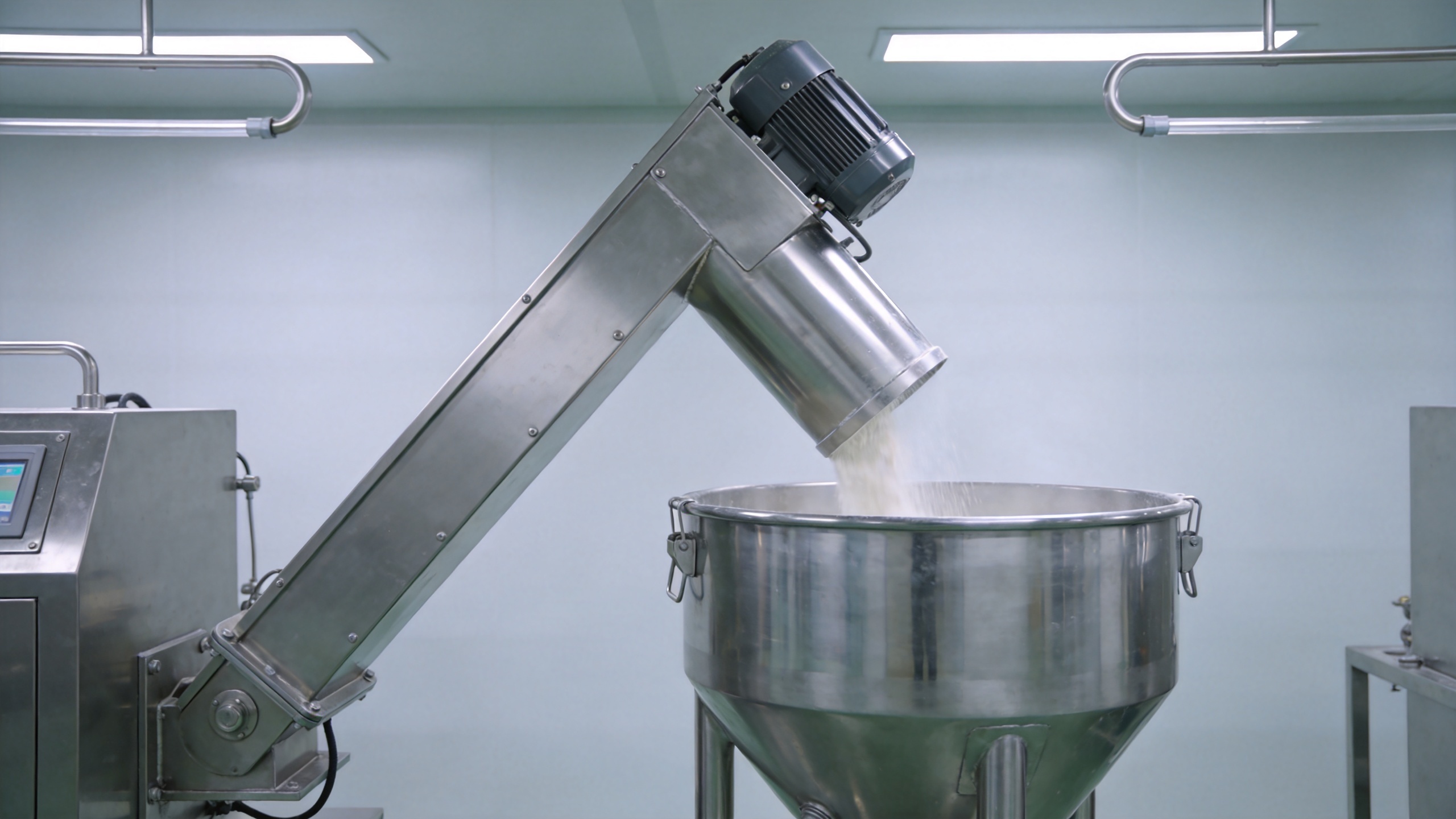
Verify the Interface with Upstream and Downstream Equipment
Process integration often decides whether a powder feeding machine performs smoothly. Confirm the upstream container type, charging method, discharge valve, and any required operator steps. At the receiving end, review the inlet diameter, valve sequence, venting path, interlocks, level indication, and the pace at which the next machine can accept material.
This is especially important for solid-dose production, where transfer equipment may connect to bins, blenders, mills, sieves, or hoppers. The selection team should observe the handoff between units: does the feeder wait safely, does material remain exposed, and can the receiving point handle the expected transfer pulse? A powder feeding machine should be selected as part of the material-handling chain.
When a fixed charging arrangement fits the planned interface, review the available FIXED LIFTING CHARGING MACHINE page with the project team. The product page is a starting point for discussion; final suitability still depends on verified material, height, connection, and operating requirements.
Put Cleanability, Containment, and Maintenance into the Purchase Specification
For pharmaceutical applications, these points should be considered early rather than added after the powder feeding machine is selected. In the United States, 21 CFR Part 211 states that equipment should be appropriately designed, adequately sized, and suitably located to facilitate its intended use and its cleaning and maintenance. The regulation also calls for written cleaning and maintenance procedures and related records.
That regulatory context does not certify a particular powder feeding machine. It does explain why the purchase specification should address contact-material information, surface finish where applicable, disassembly steps, dead zones, access for inspection, dust control, and maintenance reach. Ask the quality and engineering teams to define what evidence or documentation they need before approval.
Use a Structured Factory Acceptance and Trial Plan
Before finalizing a powder feeding machine, convert the selection criteria into a trial plan. Test the intended powder or a justified representative. Observe start-up, steady transfer, low-level behavior, stop/start response, cleaning access, and connection to the receiving equipment. Record the conditions, because identical settings do not necessarily produce identical behavior across materials or routes.
- Confirm the powder description, bulk characteristics, and permitted operating range.
- Confirm lift height, transfer route, and receiving-inlet details.
- Set acceptance criteria for transfer time, continuity, containment, and residue observation.
- Review cleaning and maintenance access with operations and quality stakeholders.
- Document deviations and the actions required before release.
A Practical Final Checklist
The most effective powder feeding machine is the one that fits the material, the layout, and the full operating routine—not merely the one with the highest advertised output. For a consideration-stage project, compare options using the same documented inputs and request clarification wherever assumptions remain.
Before purchase approval, confirm material behavior, lift and route, realistic production rate, equipment interfaces, and cleanability for the powder feeding machine. That process-first approach gives your team a clearer basis for comparing a screw, vacuum, or lifting solution and for planning a meaningful equipment trial.